
How anonymous are cryptocurrencies like Bitcoin?
Bitcoin is public and pseudonymous, not truly anonymous. This guide explains where privacy leaks happen and what stronger privacy tools can and cannot fix.
An argument financial institutions, politicians, and regulators often cite against wider adoption of cryptocurrency is that it’s “anonymous”, and therefore perfect for criminals and terrorists.
There is a real discussion to be had about privacy, surveillance, and crime. But the usual talking points are often sloppy, and the “Bitcoin is anonymous” line is one of the most misleading ones.
The short version: Bitcoin is public, traceable, and pseudonymous. That is very different from anonymous.
First, clear away the lazy argument
Cash will never be fully removable from society.
A government can try to criminalize cash use, or even invalidate huge chunks of cash value overnight — like India’s 2016 demonetization of 500 and 1,000 rupee banknotes (which represented about 86% of the value of cash in circulation at the time). Sources: Brookings and Bruegel.
That kind of move doesn’t “stop crime”; it mostly creates chaos for regular people and pushes activity into other channels.
If cash becomes inconvenient, criminals do not simply give up. They can trade in gold, silver, oil, diamonds… or even boring everyday goods with predictable resale value.
One famous example: Tide detergent becoming a kind of “street currency” in some places, because it’s easy to steal, easy to resell, and widely in demand.

Black markets also exist because “official” markets fail people.
- When shelves are empty, food gets traded informally.
- When a local currency can’t buy basics, people look for something else (dollars, euros, cigarettes, etc.).
States themselves have also funded armed groups and proxy conflicts, so “terror financing” is not a problem unique to individuals. (If you want to go down that rabbit hole, the U.S. State Department maintains an official State Sponsors of Terrorism list: https://www.state.gov/state-sponsors-of-terrorism/)
Instead, focus on the specific thing people say they’re worried about:
“Bitcoin is anonymous.”
It mostly isn’t.
Bitcoin and anonymity
First, it helps to separate privacy from anonymity:
- Privacy: outsiders can’t see what you bought / sold, or how much.
- Anonymity: outsiders can’t tell who is behind the transaction.
Cash can be both private and anonymous (no receipt, strangers, no cameras, etc.). A credit card purchase is usually neither (it’s logged and linked to you).
Bitcoin is different:
- It is not private, because transactions are publicly visible on the blockchain.
- It is pseudonymous, not truly anonymous, because identities aren’t written directly — but addresses can often be linked to people.
So why do people think it’s anonymous?
Because instead of your name, you see strings like:
bc1q...1A1zP...
Those are addresses. They’re not your name — but they can become your identity if enough clues connect them to you.
Why Bitcoin is only “partially anonymous” in practice
Most people do not enter the cryptocurrency world anonymously.
A typical first step is buying through a regulated exchange like:
- Coinbase (identity verification: https://help.coinbase.com/coinbase/managing-my-account/update-my-account/identity-verification-faq)
- Kraken (verification levels: https://support.kraken.com/articles/360001395743-verification-levels-explained)
- CEX.IO (verification requirement: https://cex.io/buy-bitcoin-without-verification)
On these platforms, buying any non-trivial amount usually requires identity verification (KYC/AML). Once you’ve done that, your activity is no longer meaningfully anonymous: there’s a paper trail connecting you to some addresses.
So for the average person:
- Bitcoin is pseudonymous in the public ledger
- but not anonymous in the real world
Losing anonymity (three common ways)
1) Carelessness
Because the blockchain is public, one slip-up can permanently link an address to you.
Examples:
- Posting an address publicly (“send donations here”)
- Re-using the same address repeatedly
- Paying in a way that later gets associated with your name (shipping, invoices, public posts)
- Showing your wallet balance on a shared screen
Once an address is connected to your identity, anyone can track the history of that address — and often connected addresses — forever.
2) Network-level identification (IP / timing)
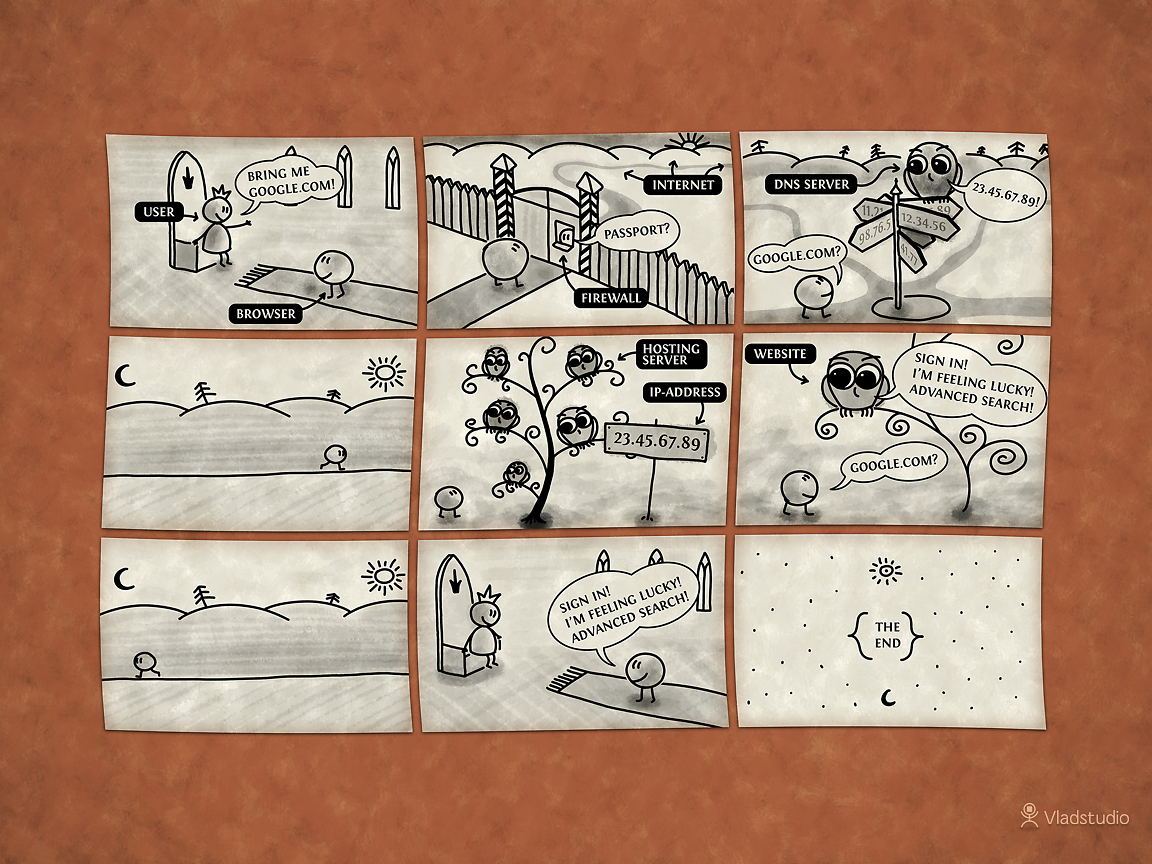
When you broadcast a Bitcoin transaction, you’re sending data over the internet. Observers can sometimes use network metadata (like where the transaction first appeared, timing, and relay patterns) to infer the origin.
This is not “movie hacker magic”; it’s real research. For example:
- “Deanonymisation of Clients in Bitcoin P2P Network” (Biryukov, Khovratovich, Pustogarov, CCS 2014): https://crysp.uwaterloo.ca/courses/pet/F15/cache/deanonbitcoin-ccs14.pdf
- “An Analysis of Anonymity in Bitcoin Using P2P Network Traffic” (Koshy et al., FC 2014): https://www.ifca.ai/fc14/papers/fc14_submission_71.pdf
Practical note: this is not guaranteed, and modern wallet setups often reduce exposure — but it’s a strong reminder that anonymity isn’t automatic.
Some people reach for Tor to hide their IP. Tor can help, but it’s not a perfect shield — traffic correlation attacks are a known research area (example overview: https://www.mdpi.com/2227-7390/12/23/3640).
If you’re relying on Tor for life-or-death anonymity, you need a threat model, not vibes.
3) Transaction graph analysis
This is the big one.
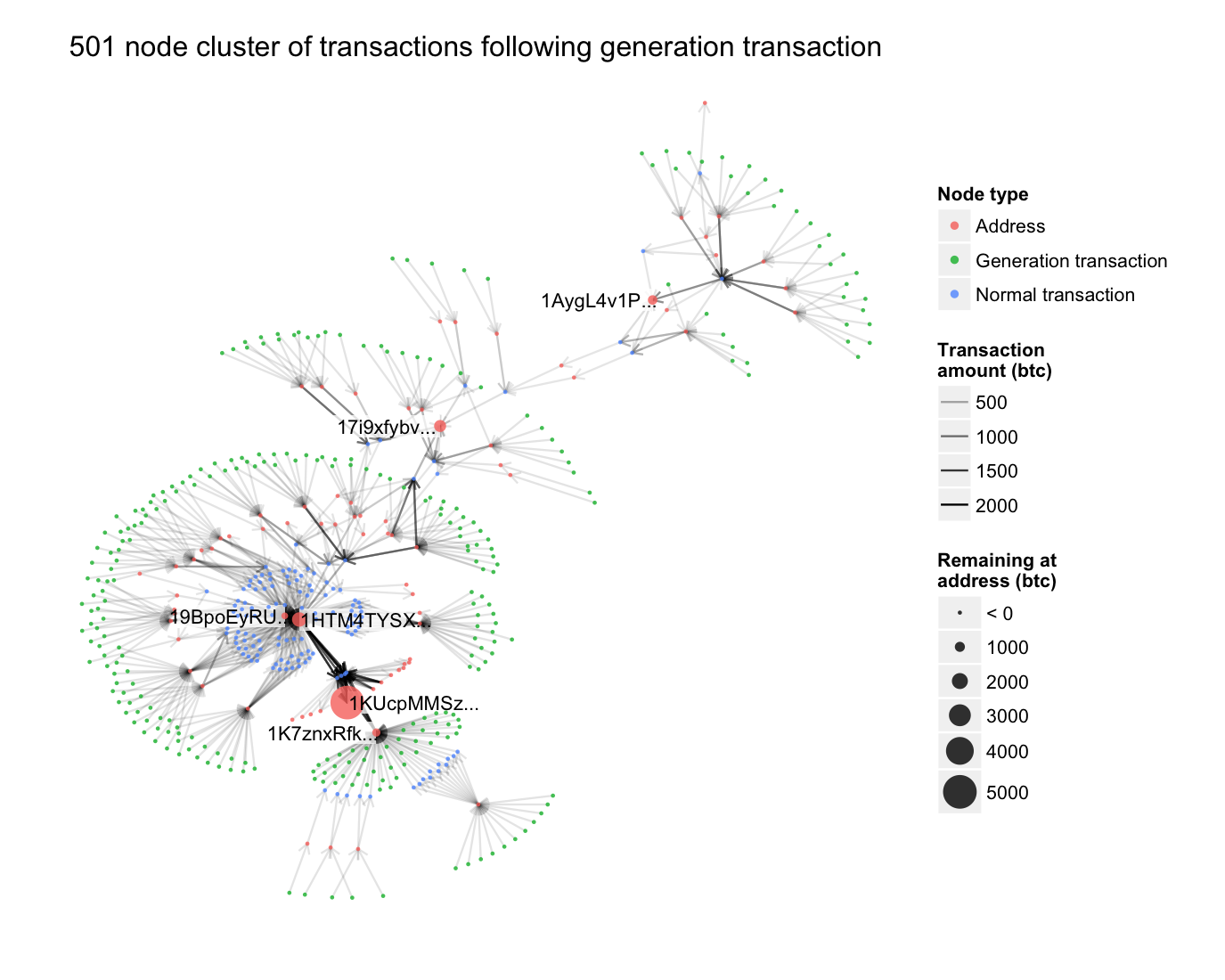
A transaction graph is the map of “money movement” through the blockchain. Analysts use patterns to cluster addresses and infer which ones likely belong to the same user or service.
The simplest version looks like this:
- If a transaction spends from multiple inputs, it’s often assumed those inputs are controlled by the same entity (because you need the private keys to spend them). (This heuristic is discussed in many sources, including Koshy et al., FC 2014: https://www.ifca.ai/fc14/papers/fc14_submission_71.pdf)
- If a transaction creates multiple outputs, one of them is often “change” (leftover funds returning to the sender).
- Human behavior leaks information (round numbers, timing, repeated habits).
None of these heuristics are perfect, and wallets have improved over the years — but graph analysis remains extremely useful, especially when combined with real-world “labels”.
Labeling: the step that turns graphs into identities
Graph analysis becomes much more powerful once you can replace “unknown address” with “known entity”.
How do addresses become “known”?
- Donation addresses are public
- Merchants sometimes reuse addresses or have recognizable patterns
- People post addresses in forum signatures, bios, emails, etc.
- Exchanges and other services can be clustered and labeled via on-chain behavior and external data
Even something seemingly harmless like:
“I bought Star Wars socks with Bitcoin!”
…can be enough if:
- there’s only one shop you used,
- the price is known,
- the timing is guessable,
- and the shop’s address is discoverable.
From there, your transaction history can be unraveled forward and backward.
This is broadly the world of blockchain analytics — companies and investigators use tools like:
- Blockchair: https://blockchair.com/
- mempool.space: https://mempool.space/
- Blockchain.com Explorer: https://www.blockchain.com/explorer
- WalletExplorer (address clustering and labeling): https://www.walletexplorer.com/
- professional tooling (e.g., Chainalysis, used by law enforcement / institutions): https://www.chainalysis.com/law-enforcement/
So… how anonymous is Bitcoin?
For most people, the honest answer is:
- Not private
- Only weakly anonymous
- Often traceable with enough context
Bitcoin is best described as pseudonymous: it doesn’t automatically reveal your name, but it also doesn’t hide your activity.
What stronger privacy tools actually change
Bitcoin privacy is weak because the ledger is public and most users eventually leak context. Stronger tools try to hide different parts of the transaction.
Monero makes privacy the default. Its docs describe ring signatures for hiding the real spent output among decoys, stealth addresses for giving every payment a one-time destination, and RingCT for hiding amounts (ring signatures, stealth addresses, RingCT).
Zcash has two worlds: transparent addresses, which behave more like Bitcoin, and shielded addresses. Zcash's own privacy docs say shielded transactions encrypt the sender, recipient, amount, and memo field (Zcash: is Zcash traceable?). The catch is practical: privacy depends on using shielded flows well, not merely holding a coin with privacy features.
Ethereum-style privacy is a different problem because people want private smart contracts, not only private transfers. Aztec, for example, describes itself as a privacy-first Ethereum L2 with private and public execution plus private and public state (Aztec docs). That is promising, but it is also more complex than "send hidden coins".
None of these tools erase exchange KYC, wallet fingerprints, browser metadata, malware, screenshots, shipping addresses, public posts, or bad operational habits. Privacy tech reduces what leaks on-chain. It does not fix the rest of your life.
Conclusion
Bitcoin's transparency is part of how the blockchain works, which is exactly why "Bitcoin is anonymous" is the wrong headline.
For most users, the honest model is:
- Bitcoin is public.
- Addresses are pseudonyms, not identities.
- Those pseudonyms can often be linked to real people.
- Stronger privacy tools help, but only inside a larger threat model.
If policy makers want to reduce harm, public ledgers are often easier to investigate than cash. The harder problem is consumer protection: scams, exchange failures, phishing, fake wallets, and people confusing pseudonymity with invisibility.